

What Is Chronic Kidney Disease (CKD)? Causes, Stages & Symptoms
Posted 01 Jul 2026 | Source:
Chronic kidney disease, or CKD, means that your kidneys have been gradually losing their ability to work properly over a period of months or years. The word “chronic” is important: it tells us that this is a long-standing process, not a sudden one. This distinction matters because chronic kidney disease often progresses silently, without dramatic symptoms, until it has reached an advanced stage.
Your two kidneys, perform several quiet but essential jobs. They filter waste products and excess fluid from your blood, balance the body’s salts and minerals, control blood pressure, activate vitamin D for healthy bones, and signal the body to produce red blood cells. When kidney function declines, all of these processes are affected — which is why advanced kidney disease can cause such a wide range of problems, from anaemia (low hemoglobin) to bone disease to high blood pressure.
How is CKD defined and staged?
We define CKD using two main measurements. The first is the estimated glomerular filtration rate, or eGFR, which reflects how well your kidneys are filtering. The second is the amount of protein (albumin) leaking into your urine, measured as the urine albumin-to-creatinine ratio, or UACR. Together, these tell us both how much function remains and how much damage is present.
CKD is divided into five stages based on eGFR. In the early stages (G1 and G2), filtration is near normal but there are signs of damage. In the middle stages (G3a and G3b), function is moderately reduced. In the later stages (G4 and G5), function is severely reduced, and stage G5 — sometimes called kidney failure or end-stage kidney disease — is the point at which renal replacement therapy (transplant or dialysis) is usually needed.
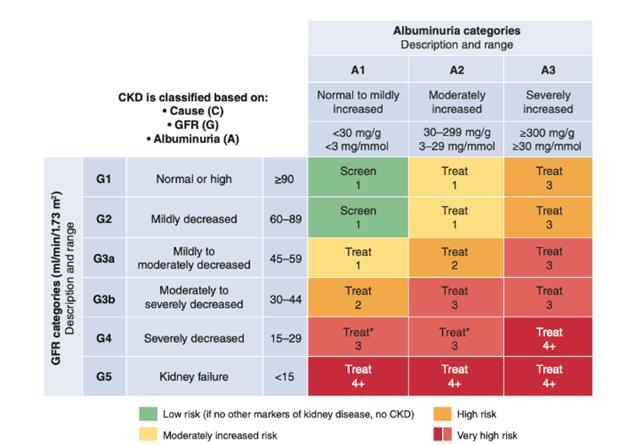
It is worth understanding that being in an early stage does not automatically mean you will progress to kidney failure. Many people with early CKD remain stable for years, especially when the underlying cause is well controlled.
What causes chronic kidney disease?
In India, the two most common causes by a wide margin are diabetes and high blood pressure. Diabetic kidney disease develops when years of elevated blood sugar damage the delicate filtering units of the kidney. High blood pressure damages the small blood vessels that supply the kidneys. Other important causes include glomerulonephritis (inflammation of the kidney’s filters), polycystic kidney disease and other inherited conditions, recurrent kidney infections, and prolonged obstruction to the flow of urine.
Why CKD is often called a “silent” disease?
One of the most challenging aspects of CKD is that it frequently causes no symptoms in its early and middle stages. The kidneys have a remarkable reserve capacity, and a person can lose a substantial amount of function before feeling unwell. When symptoms do appear, they may include tiredness, swelling of the feet or face, reduced appetite, difficulty concentrating, itching, or changes in how often you pass urine. Because these symptoms are vague and can be attributed to many other conditions, the diagnosis is often delayed.
This is precisely why screening matters. A simple blood test for creatinine and a urine test for albumin can detect kidney disease long before symptoms appear — particularly important if you have diabetes, high blood pressure, a family history of kidney disease, or are above the age of sixty.
Can chronic kidney disease be treated?
CKD cannot usually be reversed, but in most cases its progression can be slowed considerably — and that is the central goal of treatment. Good control of blood sugar and blood pressure, the use of kidney-protective medications, dietary adjustments, avoiding medicines that harm the kidneys, and regular monitoring can all make a meaningful difference to how the disease unfolds over time. Many people, with the right care, never reach the stage of needing dialysis.
When kidney function does decline to an advanced stage, there are effective treatments available — haemodialysis, peritoneal dialysis, and kidney transplantation — and planning for these well in advance leads to much better outcomes than waiting for an emergency.
If you have been told your kidney function is reduced, or you have diabetes or high blood pressure and have never had your kidneys checked, it is worth speaking to a nephrologist. Early assessment gives you the widest range of options.
